
Essential Instruments for a Beginner Numismatist Toolkit
Starting a coin collection becomes far easier when you work with a small, reliable toolkit. Basic instruments help you inspect surfaces, check authenticity, and store coins safely. Even with a budget around $50–$70, beginners can assemble a practical setup that mirrors the recommendations found in collector guides and ANA learning materials. These tools create consistency in how you evaluate new finds, from wheat cents in pocket change to silver quarters worth money picked from bank rolls.
What Is a Beginner Toolkit
Early investments should focus on clarity, accuracy, and safe handling. A beginner does not need many items, only the right ones. Each tool in the kit has a specific purpose: magnification for fine details, measurement tools for verification, and protection for long-term storage. By choosing quality over quantity, new collectors build habits that lead to better grading decisions and fewer mistakes when purchasing coins.
A structured toolkit makes daily collecting more efficient. Instead of guessing grade levels or relying on quick impressions, you can analyze and identify coins with consistent reference points. This is especially helpful for distinguishing wear from actual striking weakness, spotting mint marks, or detecting surface issues that affect value.
Key benefits include:
- Reliable inspection: Magnification highlights small details missed by the naked eye.
- Authenticity checks: Weight and size measurements rule out altered pieces or mismatched planchets.
- Preservation: Proper handling tools reduce the risk of damage, even with inexpensive coins.
- Faster sorting: Organization tools keep new finds separated by type, condition, or metal.
These fundamentals allow beginners to build confidence. Once you know how to observe a coin correctly, buying and upgrading pieces becomes far easier.
Core Categories of a Beginner Toolkit
Most starter kits revolve around four essential groups: magnification, measurement, handling, and storage. Each category supports a specific part of the collecting process. Instead of purchasing entire bundles, beginners can choose budget-friendly options that perform well and last for years.
| Tool | Purpose | Budget Pick |
| 10x Loupe | Detailed inspection | $10–15 |
| Digital Scale | Weight verification | $12 |
| Calipers | Diameter checks | $15 |
| Cotton Gloves | Oil-free handling | $5/pack |
| Coin Value App | Quick Data Checkup | free |
These items form the backbone of an effective toolkit. With them, you can evaluate coin edges, confirm weight differences between metals, and handle pieces without introducing fingerprints.
Starting With Confidence
A beginner numismatist does not need expensive microscopes or premium storage systems on day one. Instead, start with compact tools that sharpen your eye and reinforce technical consistency. Even a simple loupe transforms how you view the hobby. Once you become confident reading surfaces, identifying strike quality, and verifying physical measurements, you’ll progress smoothly into more advanced series.
Essential Tools for Inspection, Measurement, and Safe Handling
A beginner toolkit works best when each item serves a clear purpose. Magnification instruments reveal features that shape value. Measurement tools verify authenticity. Handling accessories keep coins clean and stable. Together, they create a workflow that supports accurate grading and long-term preservation.
Magnification Must-Haves
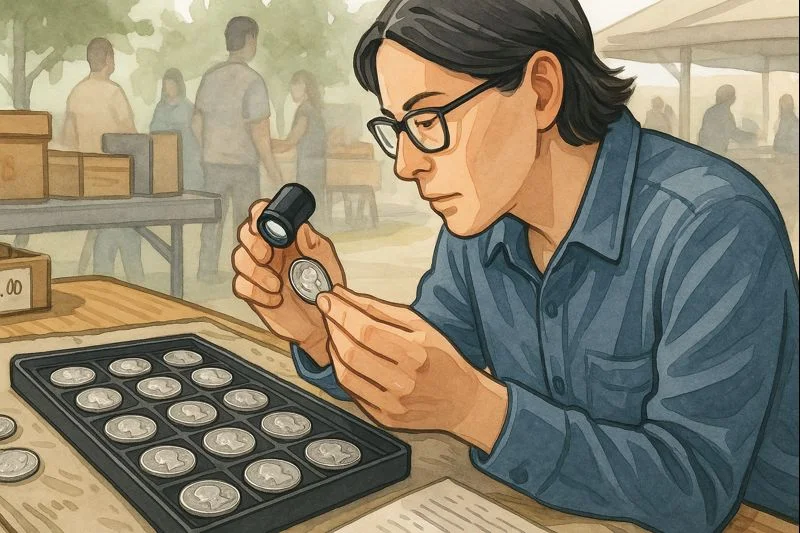
A 10x–20x loupe is the first tool every beginner should own. It reveals mint marks, doubling, fine scratches, and luster breaks. These small details influence grade and price, especially on cents, nickels, and quarters. Affordable models from Bausch & Lomb perform well and stay under $15. The loupe teaches you where to look: the date area, the rims, and high points such as Lincoln’s cheek or Washington’s hair.
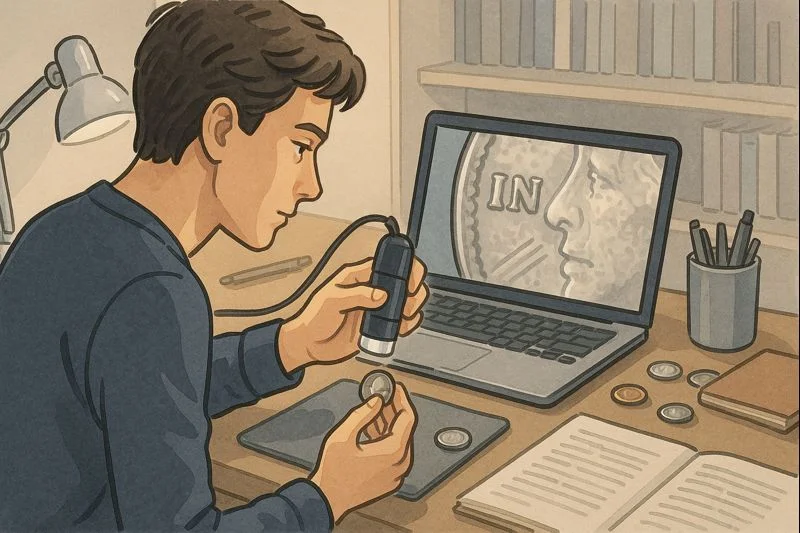
USB microscopes bring a different advantage. They magnify subtle features and display them on a screen. This helps beginners compare several coins at once. Digital zoom highlights clash marks, die polish lines, and machine doubling. Illuminated versions improve clarity under low light, making diagnostics easier with circulated copper or worn silver.
Why magnification matters:
- Identifies true doubling vs. mechanical shift
- Helps document finds for later upgrades
- Reveals early stages of wear
- Supports learning with side-by-side comparisons
These tools reinforce observational skills that every numismatist relies on.
Measurement Precision Tools
Weight and diameter are two of the strongest indicators of authenticity. Many counterfeit or altered coins fail these checks. A compact digital jewelry scale with 0.01 g accuracy allows you to compare expected weights with real results. For example:
- A genuine 1943 bronze cent should weigh 3.11 g, not the lighter steel cent range.
- A 90% silver Washington quarter should read near 6.25 g.
Digital calipers add another layer of verification. They measure diameter down to tenths of a millimeter. Beginners use them to confirm standard dimensions, spot possible planchet changes, and detect filed edges. This is especially important for world coins where sizes vary between issues.
Typical measurements beginners check:
- U.S. silver quarter: 24.3 mm
- Modern clad quarter: 24.26 mm
- Copper cents: 19.05 mm
Even slight deviations can signal a damaged or counterfeit piece.
Safe Handling and Storage
Proper handling prevents the accidental damage that beginners often face. Fingerprints, small drops, or PVC exposure can permanently reduce value.
Handling essentials:
- Cotton gloves: Prevent oils from transferring to surfaces.
- Plastic-tipped tongs: Grip the edges securely during sorting.
- Soft rolls and pads: Keep coins from sliding and scratching.
Storage essentials:
- 2×2 cardboard holders: Cheap and easy to label.
- Inert flips: Good for temporary sorting and quick swaps.
- Albums and binders: Protect completed sets and support long-term viewing.
- Lighthouse or similar PVC-free pages: Reduce chemical risk and maintain clarity.
A simple, consistent storage routine builds long-term preservation habits early. Even lower-value coins benefit from protective handling, as beginners often revisit these pieces later to study grading progression.
Reference and Digital Aids
Printed guides such as the Red Book give quick context on dates, compositions, and historical background. They help beginners understand typical pricing patterns before moving into detailed attribution.
Digital tools complement these references. A photo-based coin identification app provides instant checks when you sort larger batches. Coin ID Scanner is especially helpful for beginners because it recognizes over 187,000 world coins and displays key specifications like mint years, edge type, diameter, weight, and composition. It helps you triage mixed lots quickly and decide which coins deserve closer inspection with your loupe or scale.
Once the essential tools are in place, beginners can focus on building a workflow that supports steady growth. The first goal is consistency. The second is structure. A simple routine for sorting, labeling, and reviewing coins helps new collectors avoid confusion and track improvements in grading accuracy over time.
Sorting Basics for Daily Use
Sorting becomes smoother when tools are arranged in a predictable order. Many beginners start by inspecting each coin under the loupe, noting major defects or standout features, then verifying weight and diameter.
A practical sorting sequence looks like this:
- Surface check: Loupe inspection for scratches, wear, marks, and mint features.
- Weight confirmation: Digital scale reading to rule out mismatches or plating issues.
- Diameter check: Calipers for consistency with official specs.
- Temporary grouping: Commons, potential upgrades, and outliers placed in separate trays.
Velvet-lined trays are helpful for this stage. They reduce sliding, protect rims, and allow you to compare several coins at once. This side-by-side comparison teaches beginners how small variations affect grade and desirability.
Organizing Your Collection
Good organization saves time and prevents accidental damage. Beginners should adopt a simple classification method early—often by series, decade, type, mint mark, or grade level. Each choice supports clarity and easy long-term management.
Effective organization tools:
- 2×2 holders: Perfect for labeling condition, date found, or source.
- Inert flips: Useful for short-term separation during sorting sessions.
- Albums: Ideal for stable series such as State Quarters or America the Beautiful.
- Labeled storage boxes: Keep duplicates and future upgrade candidates in order.
Notebook logs are still effective, yet many collectors prefer digital tracking for faster updates. A structured inventory also helps identify holes in a set, highlight coins worth upgrading, and maintain budget discipline.
Building Long-Term Collecting Habits
A strong beginner toolkit does more than support early identification. It builds habits that continue as your goals evolve. With the right tools, beginners learn how to:
- Inspect coins with confidence.
- Identify potential upgrades.
- Recognize authentic vs. altered pieces.
- Preserve coins properly over time.
- Organize sets for easier tracking and display.
These skills form the base of serious collecting, even as interests expand into key dates, silver types, world issues, or advanced varieties. The more consistent the routine, the more rewarding the hobby becomes.
A beginner numismatist’s toolkit does not need to be expensive. It only needs to be practical, durable, and structured around the essential tasks of inspection, authentication, and preservation. With a loupe, digital scale, calipers, safe handling tools, organized storage, and helpful digital aids such as Coin ID Scanner, new collectors build a foundation that supports years of learning and discovery.